Research

Six kinds of data, one standard of evidence.

We develop machine learning methods for health data and put as much effort into validation as into modeling, so that results carry over to patients a model has never seen.

HIPPOCAMPUS · WHERE OUR ALZHEIMER'S MODELS LOOK

The big picture

One ecosystem, from data to care.

How the lab's work fits together. Health data of every kind feeds knowledge graphs and models; agents put them to work; the result reaches clinics and patients, under the same rules of trustworthy AI throughout.

01Multimodal health data

  • Clinical recordsEHR, clinical notes
  • Genomics & multi-omicsDNA, RNA, proteomics, metabolomics
  • Medical imagingMRI, CT, US, X-ray, histopathology, OCT
  • Physiological signalsEEG, ECG, EMG, PPG
  • Wearables & IoMTactivity, vitals, sensors
  • Patient-reported dataPROMs, PREMs, behavior
  • Environment & lifestyleexposome, social factors

02Knowledge & models

  • Biomedical knowledge graphdiseases, genes, biomarkers, pathways, treatments, guidelines
  • Graph neural networksrisk, stratification, progression, biomarkers
  • Neuro-symbolic & causal AIknowledge-guided reasoning, what-if, explainability
  • Large language & multimodal modelsclinical reasoning, generative and conversational AI
  • Cognitive digital twin & NeuroTwinpatient-specific simulation, virtual trials

03Agentic AI

Agentic AIReasoning · learning · planning · action

Multi-agent framework

  • Data agent
  • Risk agent
  • Diagnosis agent
  • Treatment agent
  • Monitoring agent
  • Patient engagement agent
  • Research & discovery agent
  • System coordination agent

04Applications & impact

  • OncologyTNBC, EOBC
  • CardiometabolicCVD, T2DM
  • NeuromuscularEMG, neuromuscular disorders
  • Mental healthanxiety, depression, SUD
  • Aging & cognitive healthAlzheimer's, sleep, frailty
  • Precision & preventive carerisk prediction, early intervention
  • Healthcare cybersecurityIoMT, critical infrastructure
  • Global & equitable healthunderserved populations

✓Trustworthy AI & responsible innovation, at every stage

  • Privacy & security
  • Fairness & bias mitigation
  • Explainability
  • Robustness & reliability
  • Human in the loop
  • Federated learning & data sovereignty
  • Regulatory compliance & ethics
  1. Actionable clinical intelligence
  2. Personalized care
  3. Improved outcomes
  4. Healthier communities

See the projects → Original ecosystem figure ↗

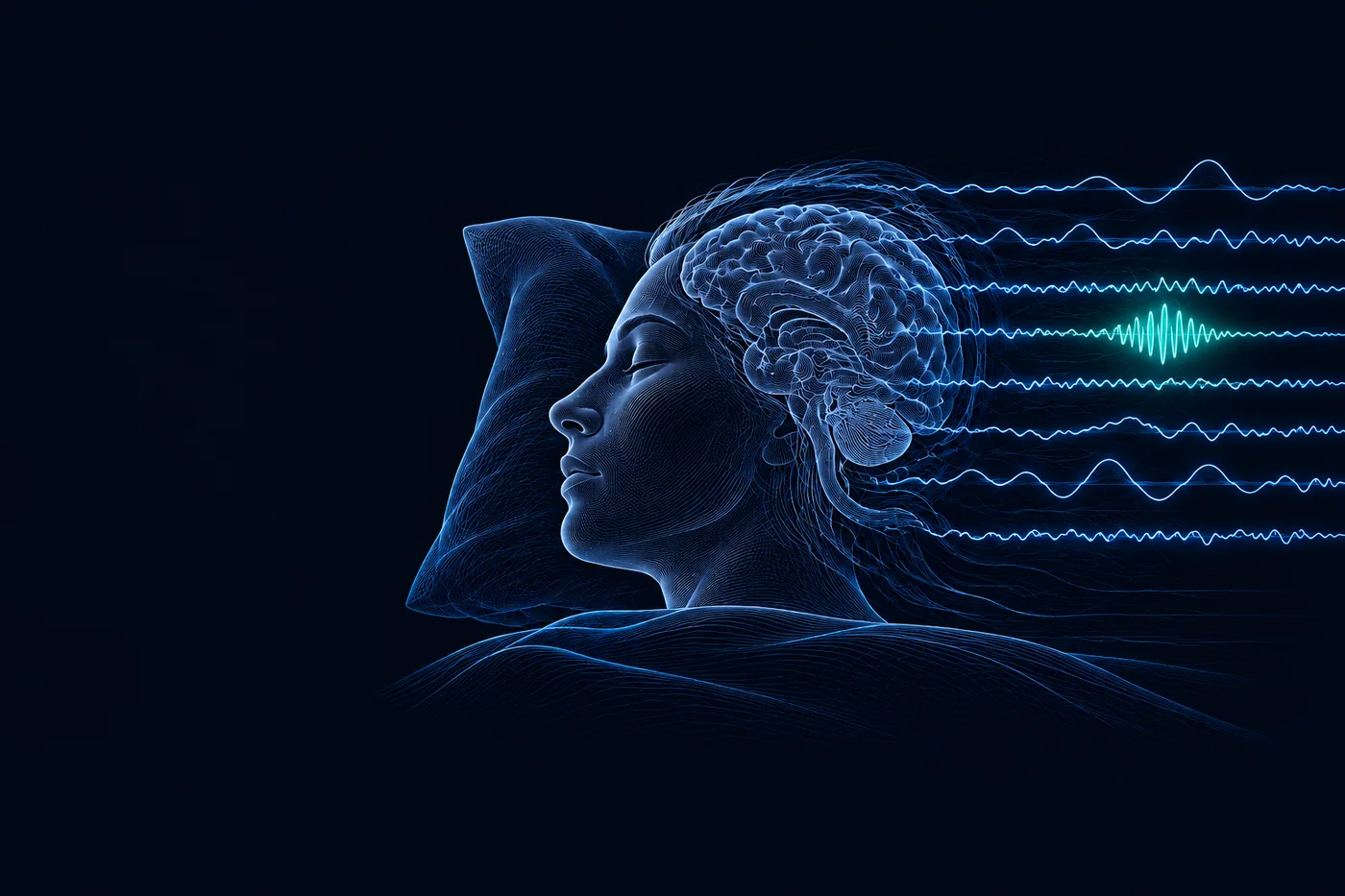
EEG · EOG · EMG · 30 s epochs

Sleep and biosignals

Machine learning on physiological time series: sleep staging from polysomnography, including newborns in intensive care, EEG-based detection of neurological and psychiatric conditions, and ECG classification.

MRI · CT · 1 mm voxels

Brain imaging

Deep learning models for brain MRI and CT, with a focus on Alzheimer's disease, stroke and hemorrhage. We validate at the level of the patient rather than the image slice, so that slices from one person never appear in both training and test data.

ECG · skin conductance

Wearables

Recognizing emotional and stress states from wearable sensors such as ECG and skin conductance, and auditing how the measurement hardware shapes the results.

Alzheimer's · dementia

Neurodegeneration

Detection and staging of Alzheimer's disease from imaging and physiological data, aimed at earlier diagnosis and better care.

LLM · multimodal

Language models for health

Large language models and multimodal frameworks that combine structured data, signals, images and text for clinical and public-health questions.

Survey · registry

Population health

Machine learning on population-scale survey and registry data, for example identifying risk factors of substance use.

Illustrations generated with ChatGPT for the AI4Health Lab. They depict research themes, not study data.

How we work

How we keep a model honest.

Step 1 · Record

Every sample keeps its patient's ID.

In this illustrative sketch: forty people with six recordings each. A real study has thousands of 30-second sleep epochs or MRI slices per person, and its cohort is usually larger. No sample ever loses track of whose body it came from.

Step 2 · The trap

Shuffling samples leaks people into the test set.

Split the samples at random and most patients end up on both sides. A model can then score well by recognizing a person's signal or anatomy rather than the disease, and the number drops on new patients or new sites. It is a common way for reported accuracy to be inflated.

Step 3 · Split

Split by person, balanced by diagnosis.

Whole patients go to the test group, with the same share of diagnosed patients and controls as the full cohort. Every sample of a test patient is sealed away before any modeling starts.

Step 4 · Tune

Every choice is made inside training.

Architecture, features, thresholds and preprocessing (such as normalization) are chosen and fitted on training patients only, by cross-validation: in each round one fold of patients checks a model trained on the others. The folds are split by person, too.

Step 5 · Test

The score comes from strangers.

The final model is scored once, on the sealed patients. Eight patients give a wide margin of error, so with small cohorts we repeat the whole procedure with a different sealed group each round (nested cross-validation, where tuning happens only inside each round's training patients) and report the spread across rounds.

40 patients × 6 samples